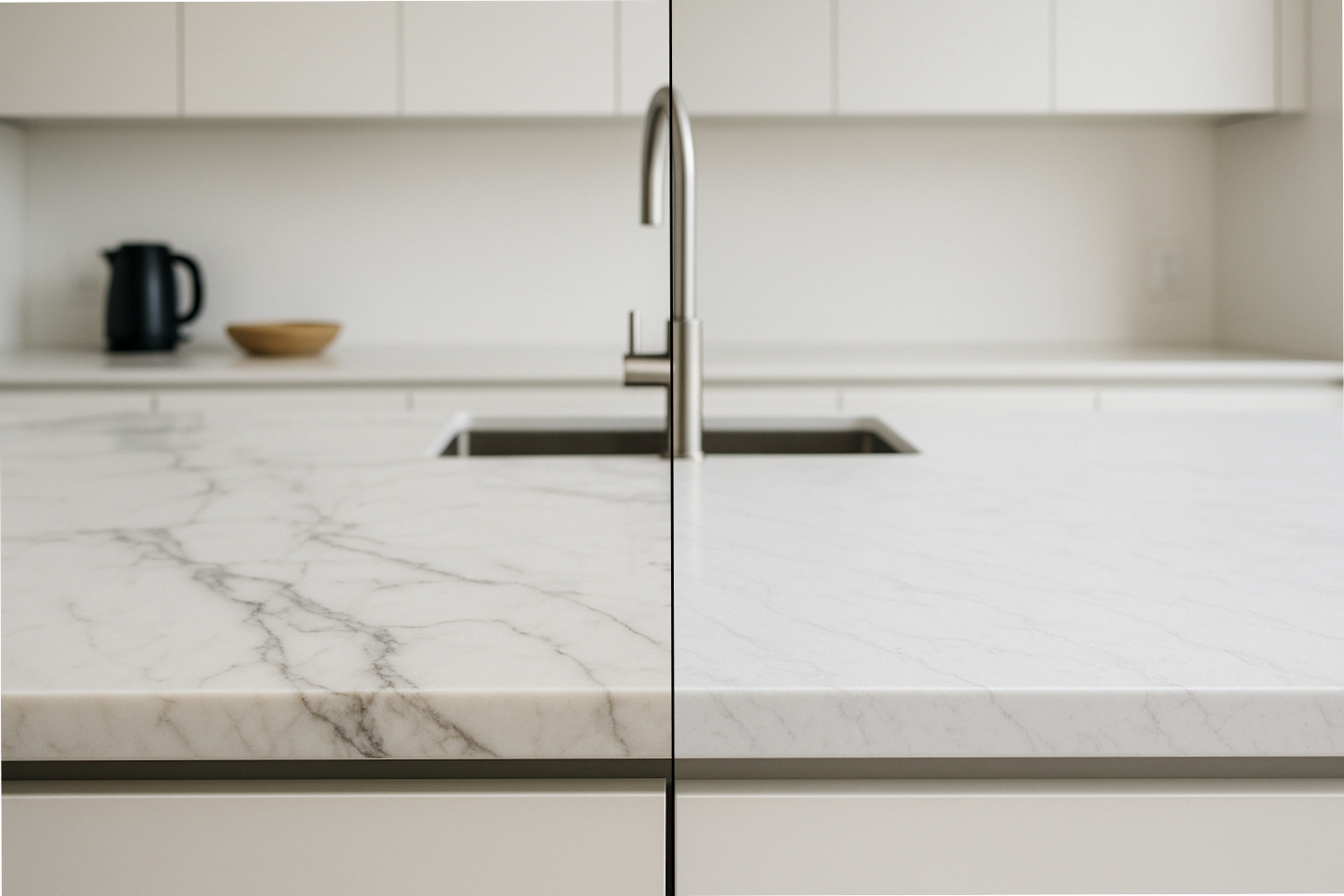
Differences Between Real and Artificial Marble
Marble is a material frequently preferred in interior and exterior design due to its naturalness and aesthetic appearance. However, in the market, there are also artificial (fake) marble options alongside natural marble. So, what are the differences between real and Artificial marble?
Real marble is formed through natural processes that take millions of years. Therefore, each slab of real marble has unique veins and patterns. Artificial marble, on the other hand, is typically made from materials like polyester resin and calcite. During the production process, artificial veins are added, but Artificial marble does not have the unique texture and random patterns found in natural marble.
In terms of durability, natural marble is quite solid and long-lasting. When properly maintained, it can retain its original appearance for years. Artificial marble, however, can wear down over time, experience color changes, and is more prone to scratches. There is also a notable difference in the tactile sensation. Natural marble, due to its stone structure, always feels cool to the touch. You can feel this coolness when you place your hand on it. Artificial marble, however, contains plastic-based components, which means it adapts to room temperature more quickly and does not give the same natural stone feel.
Natural marble is considered an eco-friendly material because it is obtained from natural resources and can be recycled. Additionally, less energy is consumed during its production, and its environmental impact is minimal. On the other hand, the production of Artificial marble typically involves synthetic plastics and resins, which increase the risk of environmental pollution. The production of plastic materials is energy-intensive and leads to environmental harm. Moreover, because Artificial marble has a shorter lifespan, it is more likely to become waste and remain in the environment for a long time. Therefore, for those looking to make an environmentally conscious choice, natural marble offers a more sustainable alternative. This is because natural marble provides a more responsible choice in the long run, both in terms of aesthetics, durability, and environmental sustainability.
In terms of value and aesthetics, natural marble adds luxury and prestige to any space. Over time, it can retain and even increase in value. Artificial marble offers short-term solutions, but it cannot fully provide the elegance and quality that natural stone offers. In conclusion, natural marble surpasses Artificial marble in both aesthetics and durability. For a high-quality and long-lasting solution, always choose natural marble.